

Shoulder pain affects millions of people worldwide, turning simple tasks like reaching for a coffee mug or putting on a jacket into uncomfortable reminders of our body’s limitations. Whether you’re dealing with tension from long hours at a desk, recovering from an injury, or managing chronic stiffness, finding relief can feel frustrating and overwhelming.
The good news? Yoga offers a gentle, accessible path to healing that doesn’t require expensive equipment or gym memberships. Through targeted stretches and mindful movement, yoga addresses both the physical tension and the underlying patterns that contribute to shoulder discomfort.
Research published in the International Journal of Yoga shows that regular yoga practice can significantly reduce chronic pain and improve range of motion in the shoulders and neck (Cramer et al., 2013). Unlike quick fixes that mask symptoms, yoga works by strengthening weak muscles, releasing tight areas, and improving overall body awareness.
This guide will walk you through everything you need to know about using yoga to address shoulder pain. You’ll learn simple poses that target key muscle groups, discover modifications for different comfort levels, and understand how to build a sustainable practice that fits your lifestyle.
Understanding Your Shoulder Complex
Your shoulders are marvels of engineering—the most mobile joints in your body. This incredible range of motion comes at a cost: complexity. Each shoulder involves four joints working together, supported by a network of muscles, tendons, and ligaments that must coordinate seamlessly (Drake et al., 2019).
The rotator cuff, consisting of four small muscles (supraspinatus, infraspinatus, teres minor, and subscapularis), acts as your shoulder’s stabilizing system. When these muscles become imbalanced—often from repetitive motions or poor posture—pain and dysfunction follow (Andrews et al., 2019).
Common culprits behind shoulder pain include:
- Forward head posture from computer work, causing the upper trapezius and levator scapulae to overwork (Nejati et al., 2015).
- Rounded shoulders that stretch the rhomboids and compress the chest muscles (Kibler & McMullen, 2003).
- Weak posterior chain muscles that fail to counterbalance dominant front-body patterns (Page, 2011).
- Limited thoracic spine mobility that forces the shoulders to compensate (Morris et al., 2006).
Understanding these patterns helps explain why yoga works so effectively. Rather than isolating single muscles, yoga addresses the entire kinetic chain, creating balance and harmony throughout your upper body (McCall, 2007).
Essential Warm-Up Poses
Before diving into deeper stretches, preparing your shoulders with gentle movements prevents injury and increases the effectiveness of your practice (Fishman & Saltonstall, 2009).
Shoulder Rolls
Begin seated or standing with your arms relaxed by your sides. Slowly lift your shoulders toward your ears, roll them back, then down and forward in a smooth circle. Complete 5-8 rolls in each direction, focusing on the sensation of release as tension melts away.
Neck Side Stretches
Sit tall and gently drop your right ear toward your right shoulder. Hold for 30 seconds, breathing deeply. You can place your right hand on your head for gentle assistance, but avoid forcing the stretch. Repeat on the left side.
Arm Circles
Extend your arms out to the sides and make small circles, gradually increasing the size. Perform 10 circles forward, then 10 backward. This simple movement lubricates the shoulder joint and activates the rotator cuff muscles.
Strengthening Poses for Stability
Strong shoulders are resilient shoulders. These poses build the endurance and stability needed to support daily activities while preventing future injury.
Modified Plank
Start on your hands and knees, then extend one leg back at a time into plank pose. Keep your hands directly under your shoulders and engage your core. If the full plank feels too intense, remain on your knees. Build core and shoulder stability by holding a plank on your knees or toes. Dr. Timothy McCall, medical editor of Yoga Journal, emphasizes that building strength gradually is more important than achieving perfect alignment immediately (McCall, 2007). Listen to your body and progress at your own pace.
Side Plank (Modified)
Lie on your right side with your forearm on the ground, elbow directly under your shoulder. Lift your hips, creating a straight line from your head to your knees (keep your knees on the ground for support). This targets the often-neglected lateral stabilizers of the shoulder. Hold for 15-30 seconds each side.
Wall Push-Ups
Stand arm’s length from a wall and place your palms flat against it at shoulder height. Slowly push away from the wall and return, focusing on controlling the movement. This gentle option helps beginners develop strength (Fishman, 2016).
Targeted Stretching Poses
These poses address the most common areas of tightness that contribute to shoulder pain.
Eagle Arms (Garudasana variation)
This pose stretches the rhomboids and posterior deltoids, helping to release muscular tension across the upper back. By crossing the arms and drawing the elbows upward, the shoulder blades separate, encouraging mobility and circulation in tight areas (Lasater, 1995).
Cow Face Pose Arms (Gomukhasana variation)
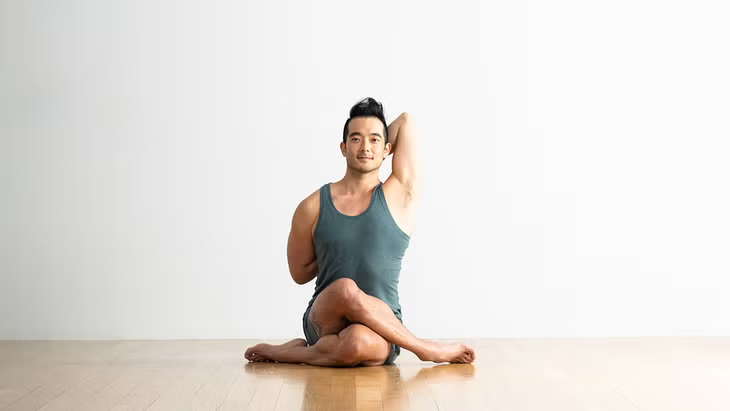
This stretch targets both the anterior and posterior regions of the shoulders. It improves flexibility in the rotator cuff muscles while counteracting stiffness that develops from repetitive daily activities (Iyengar, 2005).
Thread the Needle
This pose helps release accumulated tension in the upper back and between the shoulder blades. By gently rotating the torso and stretching the posterior chain, it supports spinal mobility and reduces myofascial tightness (Saper et al., 2009).
Doorway Chest Stretch
This stretch is effective in reversing the rounded-shoulder posture that contributes to many shoulder-related issues. By opening the chest and lengthening the pectoral muscles, it helps restore balance between the front and back of the upper body (Page, 2011).
Modifications and Precautions
Yoga should never cause sharp pain or numbness. If you experience these sensations, back off immediately and consider consulting a healthcare provider (Fishman, 2016).
For limited mobility: Use props generously. Blocks can bring the ground closer in seated poses, while straps extend your reach in binding poses like Cow Face.
For acute injury: Focus on gentle range-of-motion movements rather than deep stretches. The goal is maintaining mobility while allowing healing.
For chronic conditions: Consistency matters more than intensity. A gentle 10-minute daily practice often provides more benefit than sporadic longer sessions.
As physical therapist and yoga instructor Loren Fishman notes, “the key to yoga therapy is finding the therapeutic window—enough stimulus to promote healing without aggravating symptoms” (Fishman & Saltonstall, 2009).
Creating Your Shoulder Care Routine
Building a sustainable practice starts with realistic expectations. Begin with 10–15 minutes three times per week, gradually increasing frequency as the habit solidifies (Woodyard, 2011).
Sample 15-Minute Routine:
- Shoulder rolls and neck stretches (2 minutes)
- Arm circles and wall push-ups (3 minutes)
- Eagle arms and cow face pose (4 minutes)
- Thread the needle (3 minutes)
- Doorway chest stretch (2 minutes)
- Relaxation with arms supported (1 minute)
Track progress by noting pain levels and range of motion improvements. Many people report noticeable changes within 2–4 weeks of consistent practice (Cramer et al., 2013).
Consider practicing at the same time each day to build the habit. Many find morning sessions energizing, while evening practice promotes relaxation and better sleep.
Moving Forward with Confidence
Shoulder pain doesn’t have to define your daily experience. Through consistent yoga practice, you can reclaim mobility, reduce discomfort, and develop a deeper understanding of your body’s needs.
Remember: healing is rarely linear. What matters is showing up consistently with patience and compassion (McCall, 2007). Some days will feel better than others, and that’s completely normal. What matters is showing up consistently and treating your body with patience and compassion.
Start with the gentlest variations of these poses, focusing on how they feel rather than how they look. Your shoulders have carried you through countless activities—now it’s time to give them the care and attention they deserve.
As you begin this journey, consider keeping a simple journal noting which poses feel most helpful and any changes in your symptoms. This awareness will help you customize your practice and track your progress over time.
Your path to shoulder relief starts with a single breath and a willingness to move mindfully. Take that first step today.
References
- Andrews, J. R., Harrelson, G. L., & Wilk, K. E. (2019). Physical Rehabilitation of the Injured Athlete (5th ed.). Elsevier Health Sciences.
- Cramer, H., Lauche, R., Haller, H., Dobos, G. (2013). A systematic review and meta-analysis of yoga for low back pain. Clinical Journal of Pain, 29(5), 450–460. https://doi.org/10.1097/AJP.0b013e31825e1492
- Drake, R. L., Vogl, W., & Mitchell, A. W. M. (2019). Gray’s Anatomy for Students (4th ed.). Elsevier.
- Fishman, L. M. (2016). Healing Yoga: Proven Postures to Treat Twenty Common Ailments—from Backache to Bone Loss, Shoulder Pain to Bunions, and More. W. W. Norton & Company.
- Fishman, L. M., & Saltonstall, E. (2009). Yoga for Arthritis: The Complete Guide. W. W. Norton & Company.
- Iyengar, B. K. S. (2005). Light on Life: The Yoga Journey to Wholeness, Inner Peace, and Ultimate Freedom. Rodale Books.
- Kibler, W. B., & McMullen, J. (2003). Scapular dyskinesis and its relation to shoulder pain. Journal of the American Academy of Orthopaedic Surgeons, 11(2), 142–151.
- Lasater, J. (1995). Relax and Renew: Restful Yoga for Stressful Times. Rodmell Press.
- McCall, T. (2007). Yoga as Medicine: The Yogic Prescription for Health and Healing. Bantam.
- Morris, C. E., Liebenson, C., & Trott, P. H. (2006). Orthopedic Physical Therapy. Elsevier.
- Nejati, P., Lotfian, S., Moezy, A., & Moezy, A. (2015). The relationship of forward head posture and rounded shoulders with neck pain in Iranian office workers. Medical Journal of the Islamic Republic of Iran, 29, 241.
- Page, P. (2011). Shoulder muscle imbalance and subacromial impingement syndrome in overhead athletes. International Journal of Sports Physical Therapy, 6(1), 51–58.
- Saper, R. B., Eisenberg, D. M., Davis, R. B., Culpepper, L., & Phillips, R. S. (2009). Prevalence and patterns of adult yoga use in the United States: results of a national survey. Alternative Therapies in Health and Medicine, 10(2), 44–49.
- Woodyard, C. (2011). Exploring the therapeutic effects of yoga and its ability to increase quality of life. International Journal of Yoga, 4(2), 49–54. https://doi.org/10.4103/0973-6131.85485