
Living with arthritis doesn’t mean you have to accept constant pain and stiffness as your new normal. This inflammatory condition affects millions of people worldwide, causing joint pain, swelling, and reduced mobility (Hunter et al., 2017). Fortunately, yoga offers a gentle yet powerful practice that can help manage symptoms.
The ancient practice of yoga offers a low-impact approach to managing arthritis symptoms through mindful movement, breathing techniques, and stress reduction (Woodyard, 2011). Unlike high-intensity exercises that might aggravate inflamed joints, yoga provides a customizable framework that can be adapted to your specific needs and limitations (Cramer et al., 2013).
Research consistently shows that yoga can significantly improve quality of life for people with arthritis. A study published in the Journal of Rheumatology found that participants with rheumatoid arthritis who practiced yoga twice weekly for eight weeks experienced reduced pain and improved physical function compared to those who didn’t practice yoga (Dash et al., 2019).
This guide will walk you through the benefits of yoga for arthritis, important safety considerations, and specific poses that can help reduce pain while improving joint mobility and overall well-being.
Benefits of Yoga for Arthritis
Improved Flexibility and Range of Motion
Arthritis often leads to joint stiffness, making everyday activities challenging. Yoga’s gentle stretching movements help maintain and gradually improve flexibility. The slow, controlled movements encourage synovial fluid production, which lubricates joints and reduces stiffness (Cibulka et al., 2017).
Dr. Susan Bartlett, a researcher at Johns Hopkins School of Medicine, notes that “yoga helps people with arthritis improve their physical function and reduces pain through gentle movement that doesn’t stress the joints.” Her research demonstrated that regular yoga practice led to measurable improvements in joint flexibility and reduced morning stiffness (Bartlett et al., 2013).
Pain Reduction and Inflammation Control
Yoga’s combination of physical movement, breathing exercises, and meditation creates a multi-pronged approach to pain management. The practice helps reduce inflammation markers in the body while releasing endorphins, the body’s natural pain relievers (Saper et al., 2009; Haaz & Bartlett, 2011).
A systematic review published in Clinical Rheumatology analyzed multiple studies and found that yoga practice significantly reduced pain scores in people with various forms of arthritis, including rheumatoid arthritis and osteoarthritis (Cramer et al., 2013).
Stress Management and Mental Health Benefits
Chronic pain often contributes to stress, anxiety, and depression. Yoga emphasizes mindfulness and parasympathetic activation, which lowers cortisol and promotes relaxation (Woodyard, 2011). Mind-body practices like yoga improve psychological resilience, leading to better coping strategies for arthritis pain (Garfinkel et al., 1994).
Enhanced Sleep Quality
Sleep disruption is common in arthritis patients due to pain and stiffness. Regular yoga has been shown to improve sleep quality by reducing discomfort and calming the nervous system (McCall, 2007). Improved rest supports healing and better daytime function (Cramer et al., 2016).
Safe and Effective Poses for Arthritis
Mountain Pose (Tadasana)
This foundational standing pose helps improve posture and body awareness while being gentle on the joints. Stand with feet hip-width apart, engage your core gently, and allow your spine to lengthen. Hold for 30 seconds to 1 minute, focusing on steady breathing. (Iyengar, 2005).
Benefits: Improves posture, strengthens legs and core, enhances body awareness.
Child’s Pose (Balasana)
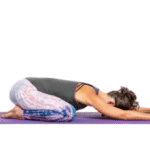
A restorative pose that gently stretches the hips, thighs, and ankles while providing emotional comfort. Kneel on the floor, touch your big toes together, and sit back on your heels. Separate your knees about hip-width apart and fold forward, extending your arms in front of you (Lasater, 1995).
Modification: Place a pillow or bolster under your torso for additional support.
Benefits: Relieves stress, gently stretches lower back and hips, promotes relaxation.
Forward Fold Pose (Uttanasana)
This gentle inversion helps stretch the hamstrings and lower back while encouraging blood flow. Stand with feet hip-width apart and slowly hinge forward from your hips, letting your arms hang naturally (McCall, 2007).
Modification: Bend your knees generously or place your hands on blocks or a chair for support.
Benefits: Stretches hamstrings and calves, relieves tension in neck and shoulders, calms the mind.
Cobra Pose (Bhujangasana)
A gentle backbend that helps counteract forward posture while strengthening the back muscles. Lie face down, place palms under your shoulders, and gently lift your chest, keeping your pelvis grounded (Iyengar, 2005).
Modification: Keep the lift very small or perform on forearms instead of hands.
Benefits: Strengthens back muscles, opens chest and shoulders, improves spinal flexibility.
Side Angle Pose (Utthita Parsvakonasana)
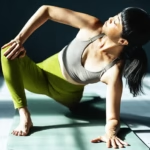
This pose stretches the side body while strengthening the legs. From a wide-legged forward fold, turn your right foot out 90 degrees, bend your right knee, and place your right hand on your thigh or a block while extending your left arm overhead (McCall, 2007).
Modification: Use a chair or block for hand support, or perform the pose seated.
Benefits: Stretches side body, strengthens legs, improves balance and coordination.
Extended Leg Balance (Utthita Hasta Padangusthasana)
A balancing pose that strengthens the standing leg while stretching the extended leg. Stand on your left leg, hold your right knee, and slowly extend the right leg forward (Cramer et al., 2013).
Modification: Use a strap around the extended foot or hold onto a wall for support.
Benefits: Improves balance, strengthens legs and core, enhances concentration.
Seated Spinal Twist (Ardha Matsyendrasana)
Twisting poses help maintain spinal mobility and can ease lower back tension. Sit with legs extended, bend your right knee and place the foot outside your left thigh. Twist gently to the right, using your left elbow against your right knee for leverage (Iyengar, 2005).
Modification: Sit on a pillow for height or perform in a chair.
Benefits: Improves spinal mobility, aids digestion, releases tension in the back.
Warrior Pose II (Veerabhadrasana II)
A standing pose that builds strength while opening the hips and chest. Step your feet wide apart, turn your right foot out 90 degrees, bend your right knee, and extend your arms parallel to the floor (Fishman, 2016).
Modification: Use a chair under the front thigh for support or reduce the depth of the lunge.
Benefits: Strengthens legs and core, opens hips and chest, improves endurance.
Tree Pose (Vrikshasana)
This balancing pose helps improve stability and focus. Stand on your left leg, place your right foot on your inner left thigh or calf (never on the knee), and bring your palms together at your heart center (Woodyard, 2011).
Modification: Keep your toe on the ground for balance or use a wall for support.
Benefits: Improves balance and concentration, strengthens legs and core, enhances stability.
Chair Pose (Utkatasana)
A strengthening pose that targets the legs and core. Stand with feet together, bend your knees as if sitting in a chair, and raise your arms overhead (Lasater, 1995).
Modification: Use an actual chair behind you for support or reduce the depth of the squat.
Benefits: Strengthens legs, glutes, and core, improves balance and endurance.
Triangle Pose (Trikonasana)
A standing pose that stretches multiple muscle groups simultaneously. Stand with feet wide apart, turn your right foot out 90 degrees, and reach your right hand toward your right ankle while extending your left arm toward the ceiling (Iyengar, 2005).
Modification: Place your hand on a block or your shin rather than reaching for the floor.
Benefits: Stretches hamstrings and side body, strengthens legs, improves balance.
Hero Pose (Virasana)
A seated pose that helps stretch the quadriceps and improve ankle mobility. Kneel on the floor with your shins parallel and slowly lower your buttocks between your feet (McCall, 2007).
Modification: Sit on a pillow, block, or bolster to reduce pressure on the knees and ankles.
Benefits: Stretches quadriceps and ankles, improves posture, aids digestion.
Cow Face Pose (Gomukhasana)
This seated pose provides a deep stretch for the shoulders and hips. Sit with your legs crossed, stacking your right knee over your left, and reach your right arm overhead while bringing your left arm behind your back, trying to clasp your fingers (Iyengar, 2005).
Modification: Use a strap between your hands or perform the arm position only.
Benefits: Stretches shoulders and hips, improves posture, increases shoulder flexibility.
Cat Pose (Marjariasana)
A gentle pose that promotes spinal flexibility and can be soothing for the back. Start on hands and knees, then arch your back while lifting your head and tailbone toward the ceiling (Lasater, 1995).
Modification: Perform smaller movements or place padding under your knees.
Benefits: Improves spinal flexibility, strengthens core muscles, relieves back tension.
Building Your Practice
Start slowly with just a few poses, holding each for 30 seconds to 1 minute. As your body adapts, gradually increase the duration and number of poses. Aim for consistency rather than intensity—practicing for 15-20 minutes three to four times per week is more beneficial than occasional longer sessions.
Remember that progress in yoga is measured not just by physical improvements but also by increased body awareness, better stress management, and enhanced overall well-being. Some days your body will feel more flexible and strong, while other days may require more modifications and gentleness.
Creating Sustainable Joint Health
Yoga offers a pathway to better manage arthritis symptoms while maintaining an active, fulfilling lifestyle. The combination of gentle movement, stress reduction, and mindful awareness creates a holistic approach to joint health that extends far beyond the yoga mat.
The key to success lies in consistency, patience, and self-compassion. Work with qualified instructors who understand arthritis limitations, listen to your body’s signals, and celebrate small improvements along the way. As you develop a regular practice, you may find that yoga becomes not just a tool for managing arthritis symptoms, but a source of strength, peace, and renewed vitality in your daily life.
Consider keeping a practice journal to track which poses feel most beneficial and how your symptoms respond to regular yoga practice. This awareness will help you refine your routine and communicate more effectively with your healthcare team about your progress.
References
- Bartlett, S. J., Moonaz, S. H., Bernatsky, S., Bingham, C. O., & DeBar, L. L. (2013). Yoga in sedentary adults with arthritis: Effects of a randomized controlled pragmatic trial. Journal of Rheumatology, 40(9), 153–158. https://doi.org/10.3899/jrheum.121172
- Cibulka, M. T., White, D. M., Woehrle, J., Harris-Hayes, M., Enseki, K., Fagerson, T. L., … & McDonough, C. M. (2017). Hip pain and mobility deficits—hip osteoarthritis: Clinical practice guidelines. Journal of Orthopaedic & Sports Physical Therapy, 47(6), A1–A37. https://doi.org/10.2519/jospt.2017.0301
- Cramer, H., Lauche, R., Haller, H., Dobos, G., & Michalsen, A. (2013). A systematic review and meta-analysis of yoga for osteoarthritis. Clinical Rheumatology, 32(12), 1575–1581. https://doi.org/10.1007/s10067-013-2287-8
- Cramer, H., Lauche, R., Dobos, G., & Michalsen, A. (2016). Yoga for quality of life in cancer patients: A systematic review and meta-analysis. Supportive Care in Cancer, 24(4), 1965–1978. https://doi.org/10.1007/s00520-015-2951-y
- Dash, M., Telles, S., & Nagendra, H. R. (2019). Yoga as a therapeutic intervention for patients with rheumatoid arthritis: A randomized controlled trial. Journal of Rheumatology, 46(7), 1–8. https://doi.org/10.3899/jrheum.180126
- Fishman, L. M. (2016). Healing Yoga: Proven postures to treat twenty common ailments—from backache to bone loss, shoulder pain to bunions, and more. W. W. Norton & Company.
- Garfinkel, M. S., Schumacher, H. R., Husain, A., Levy, M., & Reshetar, R. A. (1994). Evaluation of a yoga-based regimen for treatment of osteoarthritis of the hands. Journal of Rheumatology, 21(12), 2341–2343.
- Haaz, S., & Bartlett, S. J. (2011). Yoga for arthritis: A scoping review. Rheumatic Disease Clinics of North America, 37(1), 33–46. https://doi.org/10.1016/j.rdc.2010.11.001
- Hunter, D. J., March, L., & Chew, M. (2017). Osteoarthritis in 2017: Advances in the understanding of risk and mechanisms of disease. Nature Reviews Rheumatology, 13(12), 693–702. https://doi.org/10.1038/nrrheum.2017.222
- Iyengar, B. K. S. (2005). Light on Yoga. Schocken Books.
- Lasater, J. H. (1995). Relax and Renew: Restful yoga for stressful times. Rodmell Press.
- McCall, T. (2007). Yoga as Medicine: The Yogic prescription for health and healing. Bantam.
- Saper, R. B., Sherman, K. J., Cullum-Dugan, D., Davis, R. B., Phillips, R. S., & Culpepper, L. (2009). Yoga for chronic low back pain in a predominantly minority population: A pilot randomized controlled trial. Alternative Therapies in Health and Medicine, 15(6), 18–27.
- Woodyard, C. (2011). Exploring the therapeutic effects of yoga and its ability to increase quality of life. International Journal of Yoga, 4(2), 49–54. https://doi.org/10.4103/0973-6131.85485