
Menstrual cramps affect up to 90% of women during their reproductive years, with many experiencing pain severe enough to interfere with daily activities (Iacovides et al., 2015). While over-the-counter pain medications are commonly used, yoga offers a natural, holistic approach to managing menstrual discomfort that addresses both physical tension and emotional stress (Rakhshaee, 2011).
The ancient practice of yoga combines gentle movement, controlled breathing, and mindfulness to help relax the muscles surrounding the uterus and pelvis (Chaudhary et al., 2013). Research published in the Journal of Alternative and Complementary Medicine found that women who practiced yoga regularly experienced significant reductions in menstrual pain intensity and duration compared to those who didn’t (Rakhshaee, 2011).
Understanding how yoga works for menstrual relief can help you develop an effective practice during your cycle. The gentle stretches and poses increase blood flow to the pelvic region, release tension in the lower back and abdomen, and activate the parasympathetic nervous system—your body’s natural relaxation response (Kaur et al., 2020).
This guide explores specific yoga poses that target menstrual cramp relief, along with practical tips for adapting your practice during menstruation.
Gentle Yoga Poses for Menstrual Cramp Relief
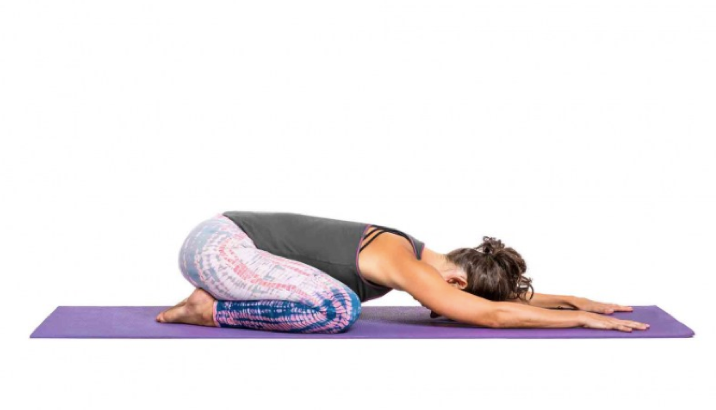
Child’s Pose (Balasana)
Child’s Pose is often considered the ultimate restorative position for menstrual relief. This forward-folding pose gently massages the abdominal organs while creating a sense of security and calm (Lasater, 1995).
To practice Child’s Pose, kneel on your mat with your big toes touching and knees hip-width apart. Sit back on your heels and fold forward, extending your arms in front of you or resting them alongside your body. Rest your forehead on the mat and breathe deeply for 1-3 minutes.
This pose helps reduce anxiety and stress while gently stretching the lower back muscles that often tighten during menstruation.
Cat-Cow Pose (Marjaryasana-Bitilasana)
The flowing movement between Cat and Cow poses creates a gentle massage for the spine and abdominal organs. This dynamic sequence helps improve circulation and reduces stiffness in the back and pelvis (McCall, 2007).
Start on your hands and knees in a tabletop position. For Cow Pose, arch your back and lift your chest and tailbone toward the ceiling. For Cat Pose, round your spine toward the ceiling while tucking your chin to your chest. Move slowly between these positions, synchronizing the movement with your breath for 5-10 rounds.
Reclining Spinal Twist (Supta Matsyendrasana)
Twisting poses help wring out tension in the torso while stimulating digestion and reducing bloating—common complaints during menstruation (Iyengar, 2005).
Lie on your back and draw your right knee to your chest. Cross your right knee over to the left side of your body while keeping your right shoulder grounded. Extend your right arm out to the side and turn your head to look toward your right hand. Hold for 1-2 minutes before switching sides.
This gentle twist massages the abdominal organs and helps relieve lower back tension.
Pigeon Pose (Eka Pada Rajakapotasana)
Hip tension often accompanies menstrual cramps, making hip-opening poses particularly beneficial. Pigeon Pose targets the deep hip flexors and can help release emotional tension stored in the pelvis (McCall, 2007).
From a tabletop position, bring your right knee forward and place it behind your right wrist. Extend your left leg straight back behind you. Lower down to rest on your forearms or fold completely forward over your front leg. Hold for 1-3 minutes before switching sides.
Use props like bolsters or blankets under your hips if the pose feels too intense.
Corpse Pose (Savasana)
Never underestimate the power of complete relaxation. Corpse Pose allows your nervous system to reset and helps manage pain perception through deep relaxation (Woodyard, 2011).
Lie flat on your back with your legs slightly apart and arms at your sides, palms facing up. Close your eyes and focus on releasing tension from every part of your body. Stay in this position for 5-15 minutes, using guided meditation or simply focusing on your breath.
Knees-to-Chest Pose (Apanasana)
This simple pose provides direct pressure to the abdominal area, which can help relieve cramping while improving digestion (Iyengar, 2005).
Lie on your back and draw both knees to your chest. Wrap your arms around your shins and gently rock from side to side or make small circles with your knees. Hold the static position for 1-2 minutes while breathing deeply.
Supine Spinal Twist
Similar to the reclining twist but with both knees together, this variation provides a deeper stretch through the lower back and hips (McCall, 2007).
Lie on your back with your knees bent and feet flat on the floor. Drop both knees to one side while keeping your shoulders grounded. Hold for 1-2 minutes, then switch sides.
Cobra Pose (Bhujangasana)
Gentle backbends can help open the front body and counteract the tendency to curl inward when experiencing cramps (Iyengar, 2005).
Lie on your stomach with your palms under your shoulders. Press into your hands to lift your chest off the ground, keeping your pelvis grounded. Only lift as high as feels comfortable and hold for 30-60 seconds.
Supported Bridge Pose (Setu Bandhasana)
Bridge Pose helps open the hip flexors and can be made more restorative with the addition of props (Lasater, 1995).
Lie on your back with your knees bent and feet flat on the floor. Lift your hips and place a yoga block or bolster under your sacrum. Allow your body weight to rest on the prop and hold for 2-5 minutes.
Tips for Practicing Yoga During Menstruation
Timing and Frequency
Practice yoga when it feels right for your body. Some women prefer gentle morning sessions to start the day with less tension, while others find evening practice helps them sleep better. Listen to your energy levels and adjust accordingly.
Short, frequent sessions of 15-20 minutes may be more beneficial than longer practices during heavy flow days (Page, 2011). Consistency matters more than duration during your cycle.
Modifications and Props
Use props liberally during menstruation. Bolsters, blankets, and blocks can make poses more accessible and comfortable (Lasater, 1995). Don’t hesitate to modify poses—sitting in a chair for twists or using the wall for support in standing poses can be just as effective.
Consider avoiding inversions like headstand or shoulder stand if they feel uncomfortable, though this varies by individual. Some women find gentle inversions like legs up the wall pose helpful for reducing bloating (Saper et al., 2009).
Listening to Your Body
Your body’s needs change throughout your cycle. What feels good on day one may not work on day three. Honor your body’s signals and adjust your practice accordingly (Woodyard, 2011).
If a pose increases cramping or discomfort, back out immediately. Yoga should provide relief, not additional stress.
Additional Strategies for Menstrual Relief
Dietary Considerations
Combine your yoga practice with anti-inflammatory foods like leafy greens, fatty fish, and berries. Magnesium-rich foods such as dark chocolate, nuts, and seeds may help reduce muscle tension and cramping (Proctor & Farquhar, 2006).
Limit inflammatory foods like processed sugars, refined grains, and excessive caffeine during your cycle.
Hydration
Proper hydration supports circulation and can reduce bloating. Warm herbal teas like ginger, chamomile, or raspberry leaf may provide additional cramping relief while keeping you hydrated (French, 2008).
Heat Therapy
Combine yoga with heat application. Use a heating pad on your lower abdomen or back after your practice, or take a warm bath to extend the muscle-relaxing benefits of your yoga session (Akin et al., 2004).
Embracing Natural Relief Through Yoga
Yoga offers a gentle, effective approach to managing menstrual cramps that addresses both physical discomfort and emotional stress (Chaudhary et al., 2013; Rakhshaee, 2011). The poses outlined in this guide work together to increase circulation, release muscle tension, and activate your body’s natural relaxation response.
Remember that developing a consistent practice takes time. Start with just a few poses and gradually build a routine that works for your schedule and comfort level. Many women find that regular yoga practice throughout their cycle—not just during menstruation—reduces the overall severity of their monthly symptoms.
Consider keeping a journal to track which poses feel most beneficial and how your symptoms respond to different practices. This personal insight will help you develop the most effective routine for your unique needs.
Your menstrual cycle doesn’t have to be a time of suffering. With these yoga tools and a compassionate approach to self-care, you can transform your relationship with your monthly cycle and find natural relief from discomfort.
References
Akin, M., Akin, F., & Yildirim, B. (2004). Effect of local heat and exercise on primary dysmenorrhea. Journal of Psychosomatic Obstetrics & Gynecology, 25(4), 299–303. https://doi.org/10.1080/01674820400014663
Chaudhary, S., Tandon, R., & Singh, R. (2013). Effect of yoga on menstrual pain, physical fitness, and quality of life in women with primary dysmenorrhea. International Journal of Yoga, 6(2), 112–118. https://doi.org/10.4103/0973-6131.113398
French, L. (2008). Dysmenorrhea. American Family Physician, 77(12), 1653–1660.
Iacovides, S., Avidon, I., & Baker, F. C. (2015). What we know about primary dysmenorrhea today: A critical review. Human Reproduction Update, 21(6), 762–778. https://doi.org/10.1093/humupd/dmv039
Iyengar, B. K. S. (2005). Light on yoga: Yoga dipika. Thorsons.
Kaur, J., Kaur, H., & Kaur, S. (2020). Yoga-based interventions for menstrual pain relief: A review. Journal of Evidence-Based Integrative Medicine, 25, 1–9. https://doi.org/10.1177/2515690X20974195
Lasater, J. (1995). Relax and renew: Restful yoga for stressful times. Rodmell Press.
McCall, T. (2007). Yoga as medicine: The yogic prescription for health and healing. Bantam.
Page, P. (2011). Current concepts in muscle stretching for exercise and rehabilitation. International Journal of Sports Physical Therapy, 6(2), 174–190.
Proctor, M., & Farquhar, C. (2006). Diagnosis and management of dysmenorrhoea. BMJ, 332(7550), 1134–1138. https://doi.org/10.1136/bmj.332.7550.1134
Rakhshaee, Z. (2011). The effect of yoga on primary dysmenorrhea in female students. Journal of Alternative and Complementary Medicine, 17(2), 167–170. https://doi.org/10.1089/acm.2009.0665
Saper, R. B., Sherman, K. J., Cullum-Dugan, D., Davis, R. B., & Phillips, R. S. (2009). Yoga for chronic low back pain in a predominantly minority population: A pilot randomized controlled trial. Alternative Therapies in Health and Medicine, 15(6), 18–27.
Woodyard, C. (2011). Exploring the therapeutic effects of yoga and its ability to increase quality of life. International Journal of Yoga, 4(2), 49–54. https://doi.org/10.4103/0973-6131.85485