
Migraines affect over 39 million people in the United States alone, causing debilitating pain that can last anywhere from four hours to several days (American Migraine Foundation, 2021). While medication remains a primary treatment option, many sufferers are turning to complementary approaches like yoga to find natural relief.
The ancient practice of yoga offers more than just physical flexibility—it provides a holistic approach to managing migraine pain through targeted poses, breathing techniques, and stress reduction. Research published in the International Journal of Yoga found that participants who practiced yoga regularly experienced a significant reduction in migraine frequency and intensity compared to those who relied solely on medication (John et al., 2007).
Whether you’re dealing with chronic migraines or occasional tension headaches, incorporating specific yoga poses into your routine can help address the root causes of your pain while providing immediate relief during an episode.
Understanding the Migraine-Yoga Connection
The relationship between stress, muscle tension, and headaches forms a complex cycle that yoga is uniquely positioned to break. Dr. Timothy McCall, medical editor of Yoga Journal, explains that “yoga’s combination of physical postures, breathing exercises, and meditation directly targets the physiological triggers of migraines (McCall, 2007).”
Tension often builds in the neck, shoulders, and upper back—areas where many migraine sufferers hold stress. This muscular tightness can compress nerves and restrict blood flow, potentially triggering or intensifying headache pain. Additionally, shallow breathing patterns during stress can reduce oxygen delivery to the brain, another common migraine trigger (Riley & Park, 2015).
Yoga addresses these issues simultaneously by releasing physical tension, promoting deeper breathing, and activating the parasympathetic nervous system—your body’s natural relaxation response. This multi-pronged approach makes yoga particularly effective for both preventing migraines and managing pain when they occur (Cramer et al., 2013).
8 Essential Yoga Poses for Migraine Relief
Hastapadasana (Standing Forward Bend)
This gentle inversion increases blood flow to the brain while releasing tension in the neck and shoulders. Stand with feet hip-width apart, then slowly fold forward from your hips, letting your arms hang heavy. Allow your head to release completely, and hold for 30 seconds to one minute. The increased circulation can help alleviate migraine pain while the forward fold promotes a sense of calm (Iyengar, 2005).
Setu Bandhasana (Bridge Pose)
Bridge pose opens the chest and throat while strengthening the back muscles that support proper posture. Lie on your back with knees bent and feet flat on the floor. Press through your heels to lift your hips, creating a bridge shape with your body. Hold for 30 seconds, breathing deeply. This pose helps counteract the forward head posture that often contributes to tension headaches (Lasater, 1995).
Shishuasana (Child’s Pose)
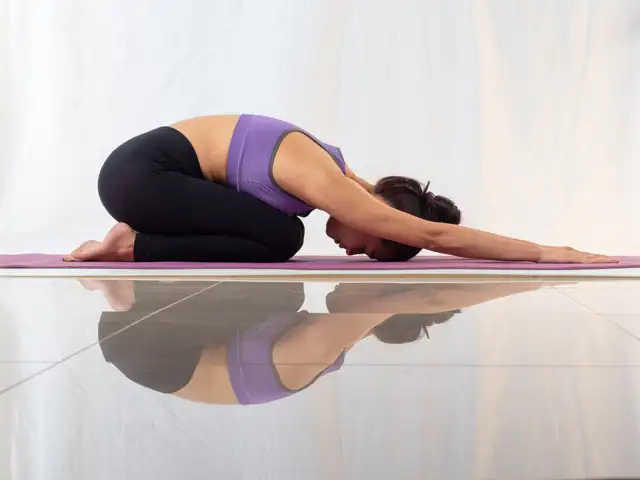
Perhaps the most restorative pose for migraine relief, Child’s Pose provides a safe haven during intense pain episodes. Kneel on the floor, touch your big toes together, and sit back on your heels. Fold forward, extending your arms in front of you and resting your forehead on the ground. This pose reduces stimulation while gently stretching the back and neck muscles (McCall, 2007).
Marjariasana (Cat Stretch)
The Cat Stretch mobilizes the spine and releases tension throughout the back and neck. Start on hands and knees in a tabletop position. As you exhale, round your spine toward the ceiling like an angry cat, dropping your head and tucking your chin to your chest. Return to neutral and repeat 5-10 times, moving slowly and mindfully (Iyengar, 2005).
Paschimottanasana (Seated Forward Bend)
This calming pose combines the benefits of forward folding with a gentle stretch for the entire back body. Sit with legs extended straight in front of you. Inhale to lengthen your spine, then exhale as you fold forward from your hips, reaching toward your feet. The inward focus and gentle compression can provide relief from migraine symptoms (McCall, 2007).
Adho Mukha Svanasana (Downward Facing Dog)
Downward Dog increases circulation while strengthening the arms and shoulders. From hands and knees, tuck your toes under and lift your hips up and back, creating an inverted V-shape with your body. Press firmly through your palms and pedal your feet to release calf tension. Hold for 30 seconds to one minute (Lasater, 1995).
Padmasana (Lotus Pose)
When migraines make movement difficult, Lotus Pose offers a comfortable seated position for breathing exercises and meditation. Sit cross-legged, placing each foot on the opposite thigh if comfortable, or simply sit with legs crossed in a comfortable position. Focus on maintaining an upright spine while breathing deeply (Iyengar, 2005).
Shavasana (Corpse Pose)
Often considered the most important pose in yoga, Shavasana allows complete relaxation and integration of your practice. Lie flat on your back with arms at your sides, palms facing up. Close your eyes and systematically relax each part of your body, starting from your toes and working up to the crown of your head. Remain in this pose for 5-15 minutes (Woodyard, 2011).
Breathing Techniques for Immediate Relief
Ujjayi Breath (Ocean Breath)
This rhythmic breathing technique helps regulate the nervous system and can provide quick relief during migraine onset. Breathe in and out through your nose, creating a soft “ocean” sound by slightly constricting your throat. The sound should be audible to you but not to others in the room. Practice this breath during poses or as a standalone technique (McCall, 2007).
Alternate Nostril Breathing (Nadi Shodhana)
Research published in the Journal of Clinical and Diagnostic Research shows that alternate nostril breathing can significantly reduce migraine frequency. Using your right thumb, close your right nostril and inhale through your left. Close your left nostril with your ring finger, release your thumb, and exhale through your right nostril. Continue alternating for 5-10 rounds, then breathe normally through both nostrils (Sengupta et al., 2011).
Creating Your Migraine Relief Routine
Start with a gentle 15-20 minute sequence, focusing on the poses that feel most beneficial for your specific symptoms. During acute migraine episodes, prioritize restorative poses like Child’s Pose and Shavasana over more active postures (Cramer et al., 2013).
For prevention, practice your routine daily, paying particular attention to stress management poses like Bridge Pose and forward bends. Consistency matters more than intensity—even five minutes of gentle yoga can make a difference in your overall migraine management (Woodyard, 2011).
Listen to your body and modify poses as needed. Some days you might feel energized enough for a full sequence, while other days might call for purely restorative poses in a darkened room.
Additional Considerations for Migraine Management
Hydration and stable blood sugar levels are essential, as both dehydration and dietary triggers play major roles in migraines (American Migraine Foundation, 2021).
Create a supportive environment for your practice. Dim lighting, cool temperatures, and minimal noise can enhance the benefits of yoga for migraine relief. Consider using props like bolsters and blankets to make poses more comfortable and accessible.
While yoga can significantly reduce migraine frequency and intensity, it’s important to maintain communication with your healthcare provider. Seek immediate medical attention if you experience sudden, severe headaches, changes in headache patterns, or headaches accompanied by fever, stiff neck, or vision changes.
Your Path to Natural Migraine Relief
Yoga offers a powerful, accessible tool for managing migraine pain that addresses both the physical and emotional aspects of this complex condition. By combining targeted poses, breathing techniques, and stress reduction practices, you can develop a personalized approach to migraine relief that complements your existing treatment plan (Cramer et al., 2013; McCall, 2007).
Start slowly, be patient with yourself, and remember that consistency is key. Many practitioners report noticing improvements in their migraine patterns within just a few weeks of regular practice. With time and dedication, yoga can become your go-to resource for both preventing migraines and finding relief when they occur.
References
American Migraine Foundation. (2021). Migraine facts. Retrieved from https://americanmigrainefoundation.org
Cramer, H., Lauche, R., Haller, H., Dobos, G., & Steckhan, N. (2013). Yoga for migraine: A systematic review of the randomized clinical trials. Headache: The Journal of Head and Face Pain, 53(3), 482–492. https://doi.org/10.1111/head.12042
Iyengar, B. K. S. (2005). Light on yoga. New York: Schocken Books.
John, P. J., Sharma, N., Sharma, C. M., & Kankane, A. (2007). Effectiveness of yoga therapy in the treatment of migraine without aura: A randomized controlled trial. International Journal of Yoga, 1(1), 29–36. https://doi.org/10.4103/0973-6131.36790
Lasater, J. H. (1995). Relax and renew: Restful yoga for stressful times. Berkeley, CA: Rodmell Press.
McCall, T. (2007). Yoga as medicine: The yogic prescription for health and healing. New York: Bantam.
Riley, K. E., & Park, C. L. (2015). How does yoga reduce stress? A systematic review of mechanisms of change and guide to future inquiry. Health Psychology Review, 9(3), 379–396. https://doi.org/10.1080/17437199.2014.981778
Sengupta, P., Banerjee, A., & Das, N. (2011). Effect of alternate nostril breathing exercise on migraine headache. Journal of Clinical and Diagnostic Research, 5(5), 1025–1027.
Woodyard, C. (2011). Exploring the therapeutic effects of yoga and its ability to increase quality of life. International Journal of Yoga, 4(2), 49–54. https://doi.org/10.4103/0973-6131.85485