
Sciatica affects millions of people worldwide, causing sharp, shooting pain that radiates from the lower back down through the leg. This debilitating condition can make simple daily activities feel overwhelming and significantly impact quality of life.
The good news? Yoga offers a gentle, effective approach to managing sciatica pain. Research published in the Annals of Internal Medicine found that yoga can be as effective as physical therapy for treating chronic lower back pain, including sciatica-related discomfort (Sherman et al., 2011). Through targeted stretches, strengthening poses, and mindful movement, yoga addresses both the physical and mental aspects of pain management.
This comprehensive guide will explore how yoga can provide relief from sciatica pain, introduce you to specific poses that target the affected areas, and share essential safety tips for practicing with this condition. Whether you’re new to yoga or looking to modify your existing practice, you’ll discover practical strategies to help ease your discomfort and support long-term healing.
Understanding Sciatica and Its Common Causes
Sciatica occurs when the sciatic nerve—the longest nerve in your body—becomes compressed or irritated. This nerve runs from your lower spine through your hips and buttocks, extending down each leg (National Institute of Neurological Disorders and Stroke, 2020). When pressure is applied to this nerve, it creates the characteristic burning, tingling, or sharp shooting pain that defines sciatica.
Several conditions can trigger sciatica symptoms:
Herniated discs are among the most common culprits. When the soft inner material of a spinal disc pushes through its outer layer, it can press against the sciatic nerve root (Ropper & Zafonte, 2015).
Piriformis syndrome develops when the piriformis muscle, located deep in the buttock, becomes tight or spasms and compresses the sciatic nerve that runs underneath or through it (Hopayian & Danielyan, 2018).
Spinal stenosis involves narrowing of the spinal canal, which can put pressure on nerve roots including those that form the sciatic nerve (Kalichman & Cole, 2009).
Degenerative disc disease and bone spurs can also contribute to nerve compression, particularly as we age (Atlas et al., 2001).
Understanding these underlying causes helps explain why yoga’s multi-faceted approach—combining stretching, strengthening, and alignment—can be so effective for sciatica relief.
How Yoga Alleviates Sciatica Pain
Yoga addresses sciatica through several mechanisms that target both symptoms and root causes. The practice offers a holistic approach that goes beyond temporary pain relief to support long-term healing and prevention.
Improved flexibility is one of yoga’s primary benefits for sciatica sufferers. Tight muscles in the hips, hamstrings, and lower back often contribute to nerve compression. Regular yoga practice gradually increases flexibility in these areas, reducing pressure on the sciatic nerve (Williams et al., 2009).
Enhanced spinal alignment plays a crucial role in sciatica management. Many yoga poses focus on proper posture and spinal positioning, which can alleviate pressure points that contribute to nerve irritation. A study in Pain Medicine found that yoga practitioners showed significant improvements in spinal flexibility and reduced pain scores (Tilbrook et al., 2011).
Strengthening of core muscles provides better support for the spine and pelvis. When your core is strong, it takes pressure off the lower back and helps maintain proper alignment during daily activities (Cramer et al., 2013).
Stress reduction and pain management represent another vital component. Chronic pain creates a cycle of tension and stress that can worsen symptoms. Yoga’s emphasis on breathing and mindfulness helps break this cycle, reducing both physical tension and mental stress associated with chronic pain (Chou et al., 2017).
Improved circulation through yoga movements helps deliver nutrients to affected tissues and may support the healing process (Woodyard, 2011).
Key Yoga Poses for Sciatica Relief
The following poses have been specifically chosen for their ability to address common contributors to sciatica pain. Remember to move slowly and listen to your body throughout your practice.
Child’s Pose (Balasana)
Child’s Pose provides gentle spinal elongation and hip flexor stretching while offering a restorative position for pain relief (Lasater, 1995). This pose helps decompress the spine and can provide immediate comfort during acute pain episodes.
Begin on your hands and knees, then sit back on your heels while extending your arms forward. Rest your forehead on the ground and breathe deeply. Hold for 1-3 minutes, allowing your lower back to gently stretch and release tension.
Downward-Facing Dog
This foundational pose stretches the entire posterior chain, including the hamstrings and calves, which often contribute to sciatic nerve tension. It also helps decompress the spine through gentle inversion (Iyengar, 2005).
Start on hands and knees, tuck your toes, and lift your hips up and back. Keep a slight bend in your knees if needed, focusing on lengthening your spine rather than straightening your legs completely. Hold for 30 seconds to 1 minute.
Half Moon Pose (Ardha Chandrasana)
Half Moon Pose strengthens the supporting muscles around the spine while providing a lateral stretch that can help relieve nerve compression (Khalsa & Cope, 2006). Use a wall or block for support as needed.
From a wide-legged forward fold, place your right hand on the ground or block while lifting your left leg parallel to the floor. Extend your left arm toward the ceiling, creating a straight line from your left fingertips to your left toes.
Cobra Pose (Bhujangasana)
Cobra Pose strengthens the back muscles while gently extending the spine, which can help counteract forward posture that contributes to disc problems (Saper et al., 2009).
Lie face down with palms under your shoulders. Press into your hands to lift your chest, keeping your pelvis grounded. Start with a low lift and gradually increase the extension as your back strength improves.
Locust Pose (Salabhasana)
This pose strengthens the entire back body, including the muscles that support proper spinal alignment and posture (Feuerstein, 2011).
Lie face down with arms alongside your body. Lift your chest, arms, and legs simultaneously, engaging your back muscles. Hold for 15-30 seconds, focusing on length rather than height.
Pigeon Pose and Modifications
Pigeon Pose targets the piriformis muscle and hip flexors, making it particularly valuable for piriformis syndrome-related sciatica (Kaplan et al., 2013).
From hands and knees, bring your right knee forward and place it behind your right wrist. Extend your left leg straight back. If this is too intense, try the figure-four stretch lying on your back instead.
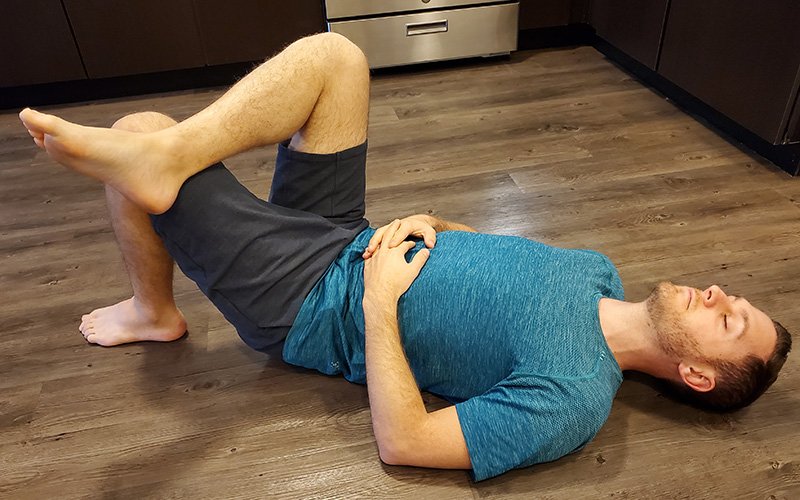
Knee-to-Chest Pose
This gentle pose helps relieve lower back tension and can provide immediate comfort during pain flares.
Lie on your back and draw one knee toward your chest, holding behind the thigh or shin. Keep your other leg extended or bent with foot flat on the floor, whichever feels more comfortable (Lasater, 1995).
Reclining Twist
Spinal twists help improve mobility and can release tension in the lower back and hips.
Lie on your back with knees bent. Let both knees fall to one side while keeping your shoulders grounded. Hold for 1-2 minutes before switching sides (Iyengar, 2005).
Bridge Pose (Setu Bandha Sarvangasana)
Bridge Pose strengthens the glutes and hamstrings while opening the hip flexors, addressing multiple factors that contribute to sciatica (Saper et al., 2009).
Lie on your back with knees bent and feet flat on the floor. Press into your feet to lift your hips, creating a straight line from knees to shoulders.
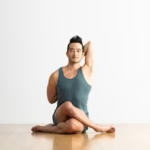
Half Lord of the Fishes Pose (Ardha Matsyendrasana)
This seated twist improves spinal mobility and stretches the outer hip muscles (Feuerstein, 2011).
Sit with legs extended, then bend your right knee and place your right foot outside your left thigh. Twist to the right, using your left elbow against your right knee for gentle leverage.
Legs-Up-the-Wall Pose (Viparita Karani)
This restorative inversion helps reduce swelling and tension in the legs while providing gentle spinal decompression.
Lie on your back near a wall and extend your legs up the wall. Let your arms rest by your sides and breathe deeply for 5-10 minutes (Khalsa & Cope, 2006).
Standing Forward Bend (with Caution)
Forward bends can help stretch the hamstrings and lower back, but they require careful attention to avoid aggravating disc problems.
Stand with feet hip-width apart and fold forward from your hips, keeping a slight bend in your knees. Support yourself with hands on your thighs or a block if needed (Iyengar, 2005).
Tips for Practicing Yoga Safely with Sciatica
Safety should always be your top priority when practicing yoga with sciatica. These guidelines will help you maximize benefits while minimizing risk of injury or symptom aggravation (Cramer et al., 2013).
Start slowly and gradually progress. Begin with gentle poses and shorter hold times, gradually building intensity and duration as your body adapts and symptoms improve.
Use props generously. Blocks, bolsters, straps, and blankets can help you access poses safely and comfortably. Don’t hesitate to modify poses extensively—the goal is relief, not perfect form.
Focus on alignment over depth. Proper alignment is more important than achieving the full expression of a pose. Work within your comfortable range of motion and avoid forcing stretches.
Listen to your body consistently. Pain is your body’s warning system. If a pose increases your sciatica symptoms or creates new pain, back off immediately or skip that pose entirely.
Breathe deeply throughout your practice. Proper breathing helps manage pain, reduces tension, and supports your body’s natural healing processes.
Consider working with a qualified instructor who has experience with therapeutic yoga or injury modifications, especially when you’re first starting your practice.
What to Avoid When Doing Yoga with Sciatica
Certain movements and poses can potentially worsen sciatica symptoms. Being aware of these contraindications will help protect your recovery.
Avoid deep forward bends with straight legs, particularly if you have a herniated disc. These can increase pressure on the disc and worsen nerve compression.
Skip intense backbends until your symptoms have significantly improved. Deep backbends can compress already irritated nerve roots.
Be cautious with twisting poses, especially deep twists that might aggravate disc problems. Always twist slowly and avoid forced rotations.
Avoid poses that require you to sit directly on hard surfaces for extended periods, as this can increase pressure on the sciatic nerve.
Don’t ignore warning signs. Increased numbness, tingling, or shooting pain during or after practice indicates you need to modify or avoid certain poses.
Avoid practicing during acute pain flares. Rest during severe symptoms and resume gentle practice only when pain begins to subside.
Building a Sustainable Practice for Long-Term Relief
Consistency in your yoga practice is key to achieving lasting sciatica relief. Research published in the International Journal of Yoga demonstrates that regular practice over time produces more significant and sustained improvements than sporadic sessions (Cramer et al., 2012).
Start with 10-15 minutes of gentle poses daily, gradually increasing duration as your body adapts. Quality is more important than quantity—a brief, mindful practice performed regularly will be more beneficial than occasional long sessions.
Track your symptoms and practice patterns to identify which poses and sequences work best for your specific condition. This personal awareness will help you develop a customized routine that addresses your unique needs.
Consider seasonal adjustments to your practice. Cold weather may require longer warm-ups and gentler stretches, while warmer months might allow for more dynamic movements.
Remember that healing is not always linear. You may experience good days and challenging days. Be patient with yourself and maintain consistency even when progress feels slow.
Working with healthcare providers who support integrative approaches can help you develop a comprehensive treatment plan that includes yoga alongside other therapeutic interventions (Chou et al., 2017).
Embracing Yoga as Your Path to Sciatica Relief
Yoga offers a powerful, accessible approach to managing sciatica pain that addresses both physical symptoms and overall well-being. Through consistent practice of targeted poses, mindful movement, and proper safety precautions, many people find significant relief from their sciatica symptoms.
The journey to pain relief requires patience, consistency, and compassion for yourself. Start with gentle poses, listen to your body’s signals, and gradually build a practice that supports your unique needs. Remember that every small step forward contributes to your overall healing process.
Consider beginning with the gentler poses outlined in this guide, such as Child’s Pose and Knee-to-Chest, before progressing to more challenging postures. If you’re new to yoga or have severe symptoms, working with a qualified instructor who understands therapeutic applications can provide valuable guidance and support.
Your path to sciatica relief through yoga is unique to you. Embrace the process, celebrate small victories, and trust in your body’s natural ability to heal when given the right support and care.
References
- Atlas, S. J., Deyo, R. A., Keller, R. B., Chapin, A. M., Patrick, D. L., Long, J. M., & Singer, D. E. (2001). The Maine Lumbar Spine Study, Part II. 1-year outcomes of surgical and nonsurgical management of sciatica. Spine, 21(15), 1777–1786. https://doi.org/10.1097/00007632-199608010-00011
- Chou, R., Deyo, R., Friedly, J., Skelly, A., Hashimoto, R., Weimer, M., … & Fu, R. (2017). Nonpharmacologic therapies for low back pain: A systematic review for an American College of Physicians clinical practice guideline. Annals of Internal Medicine, 166(7), 493–505. https://doi.org/10.7326/M16-2459
- Cramer, H., Lauche, R., Haller, H., Dobos, G. (2013). A systematic review and meta-analysis of yoga for low back pain. Clinical Journal of Pain, 29(5), 450–460. https://doi.org/10.1097/AJP.0b013e31825e1492
- Cramer, H., Lauche, R., Hohmann, C., Lüdtke, R., Haller, H., Michalsen, A., & Dobos, G. (2012). Randomized-controlled trial comparing yoga and home-based exercise for chronic low back pain. International Journal of Yoga, 5(1), 36–44. https://doi.org/10.4103/0973-6131.91707
- Feuerstein, G. (2011). The yoga tradition: Its history, literature, philosophy and practice (3rd ed.). Hohm Press.
- Hopayian, K., & Danielyan, A. (2018). Four symptoms define the piriformis syndrome: An updated systematic review of its clinical features. European Journal of Orthopaedic Surgery & Traumatology, 28(2), 155–164. https://doi.org/10.1007/s00590-017-2064-5
- Iyengar, B. K. S. (2005). Light on yoga. HarperCollins.
- Kalichman, L., & Cole, R. (2009). Spinal stenosis: Diagnostic and treatment considerations. Physical Therapy, 89(9), 843–852. https://doi.org/10.2522/ptj.20080331
- Kaplan, Y., Dabby, R., & Rosenthal, N. (2013). Piriformis syndrome: A cause of non-discogenic sciatica. Israel Medical Association Journal, 15(9), 610–611.
- Khalsa, S. B. S., & Cope, S. (2006). Effects of a yoga lifestyle intervention on performance-related characteristics of musicians: A preliminary study. Medical Science Monitor, 12(8), CR325–CR331.
- Lasater, J. H. (1995). Relax and renew: Restful yoga for stressful times. Rodmell Press.
- National Institute of Neurological Disorders and Stroke. (2020). Sciatica fact sheet. National Institutes of Health. https://www.ninds.nih.gov/health-information/disorders/sciatica
- Ropper, A. H., & Zafonte, R. D. (2015). Sciatica. New England Journal of Medicine, 372(13), 1240–1248. https://doi.org/10.1056/NEJMra1410151
- Saper, R. B., Sherman, K. J., Cullum-Dugan, D., Davis, R. B., Phillips, R. S., & Culpepper, L. (2009). Yoga for chronic low back pain in a predominantly minority population: A pilot randomized controlled trial. Alternative Therapies in Health and Medicine, 15(6), 18–27.
- Sherman, K. J., Cherkin, D. C., Wellman, R. D., Cook, A. J., Hawkes, R. J., Delaney, K., & Deyo, R. A. (2011). A randomized trial comparing yoga, stretching, and a self-care book for chronic low back pain. Annals of Internal Medicine, 155(9), 569–578. https://doi.org/10.7326/0003-4819-155-9-201111010-00003
- Tilbrook, H. E., Cox, H., Hewitt, C. E., Kang’ombe, A. R., Chuang, L. H., Jayakody, S., … & Little, P. (2011). Yoga for chronic low back pain: A randomized trial. Pain, 152(9), 2098–2107. https://doi.org/10.1016/j.pain.2011.05.002
- Williams, K., Petronis, J., Smith, D., Goodrich, D., Wu, J., Ravi, N., … & Gross, R. (2009). Effect of Iyengar yoga therapy for chronic low back pain. Pain, 141(3), 369–378. https://doi.org/10.1016/j.pain.2008.12.007
- Woodyard, C. (2011). Exploring the therapeutic effects of yoga and its ability to increase quality of life. International Journal of Yoga, 4(2), 49–54. https://doi.org/10.4103/0973-6131.85485